Do You Actually Need a Chatbot, or Just a Better FAQ Page?
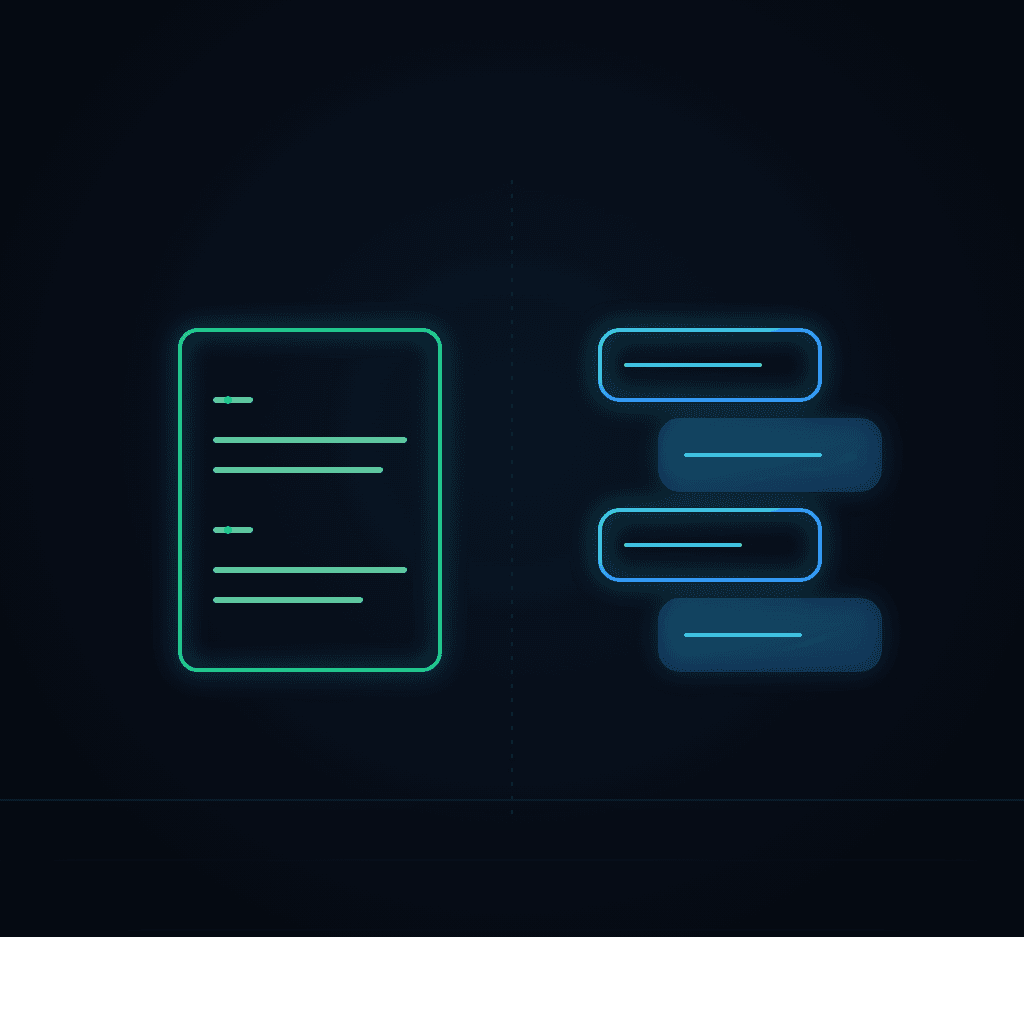
A chatbot is the right tool for some businesses and a solution looking for a problem for others. An honest way to tell which one you are before spending anything.
A chatbot sounds like the obviously modern answer to "customers keep asking the same questions." Sometimes it is. Sometimes the honest answer is that your FAQ page is three years out of date, buried two clicks deep in a footer nobody visits, and written in a way that doesn't actually answer what people are asking -- and fixing that gets you most of the benefit for a fraction of the cost, with nothing new to maintain. Telling those two situations apart before spending anything is worth ten minutes.
The Question That Actually Matters: Volume and Shape
A chatbot earns its cost when questions are frequent, varied in phrasing, and need to be answered any time someone's actually on your site -- not just during business hours. If you're fielding the same twenty questions by email or phone every week, worded a dozen different ways, and a visitor who doesn't get an answer in the next thirty seconds just leaves, that's real volume with a real shape a chatbot handles well. If you're getting a handful of questions a month, or the questions are genuinely novel every time, no amount of AI fixes that -- there isn't a repeating pattern to automate in the first place.
What a Good FAQ Page Already Solves
A page that actually answers the real questions -- not the ones a business wishes people asked -- solved a surprising amount of this before chatbots existed. The reason FAQ pages get a bad reputation isn't the format, it's execution: eight questions nobody's actually asking, written once at launch and never touched again, sorted by no obvious logic, buried where search engines and visitors alike struggle to find them. A rewritten, honestly-scoped FAQ page, built from your actual support inbox instead of guesswork, often closes most of the gap a chatbot would have closed -- for the cost of an afternoon instead of an ongoing system.
Where the Chatbot Genuinely Wins
Two things a well-written FAQ page structurally can't do: handle a question phrased in a way you didn't anticipate, and hold a back-and-forth. "Do you ship to Canada" is an FAQ entry. "I'm in Toronto, need it by the 15th, does that work with your shipping options" is a conversation -- and a visitor who has to dig through a FAQ page to piece together an answer to a compound question is a visitor who's more likely to just leave instead. If your actual questions look like the second example more often than the first, that's the case for something that can actually converse, grounded in your real content rather than guessing (see "Why Grounded Beats Clever" for what that grounding has to look like to be trustworthy).
A Rough Filter Before Spending Anything
- Pull your last month of real customer questions -- email, DMs, phone notes, whatever you've got. Not a guess. The actual questions.
- Sort them: how many are genuinely one-line, static facts (hours, shipping, returns) versus how many need back-and-forth or depend on details specific to that customer?
- If it's mostly static facts, a properly written, properly placed FAQ page is very likely the entire fix, and it's worth trying that first regardless -- it's needed either way, since a chatbot without solid underlying content to draw from isn't actually solving anything.
- If a meaningful share genuinely needs conversation, that's a legitimate case for a chatbot -- and the FAQ work from step 3 becomes the content it's grounded in, not wasted effort either way.
The Honest Bottom Line
Nobody selling chatbots for a living loves saying this, but it's the same principle that runs through everything else here: build the thing that's actually needed, not the more impressive-sounding one. A lot of businesses need a better FAQ page long before they need a chatbot. Some genuinely need both. Figuring out which one you are, honestly, before spending anything, is worth the ten minutes it takes.