System Initializing
Loading Assets...
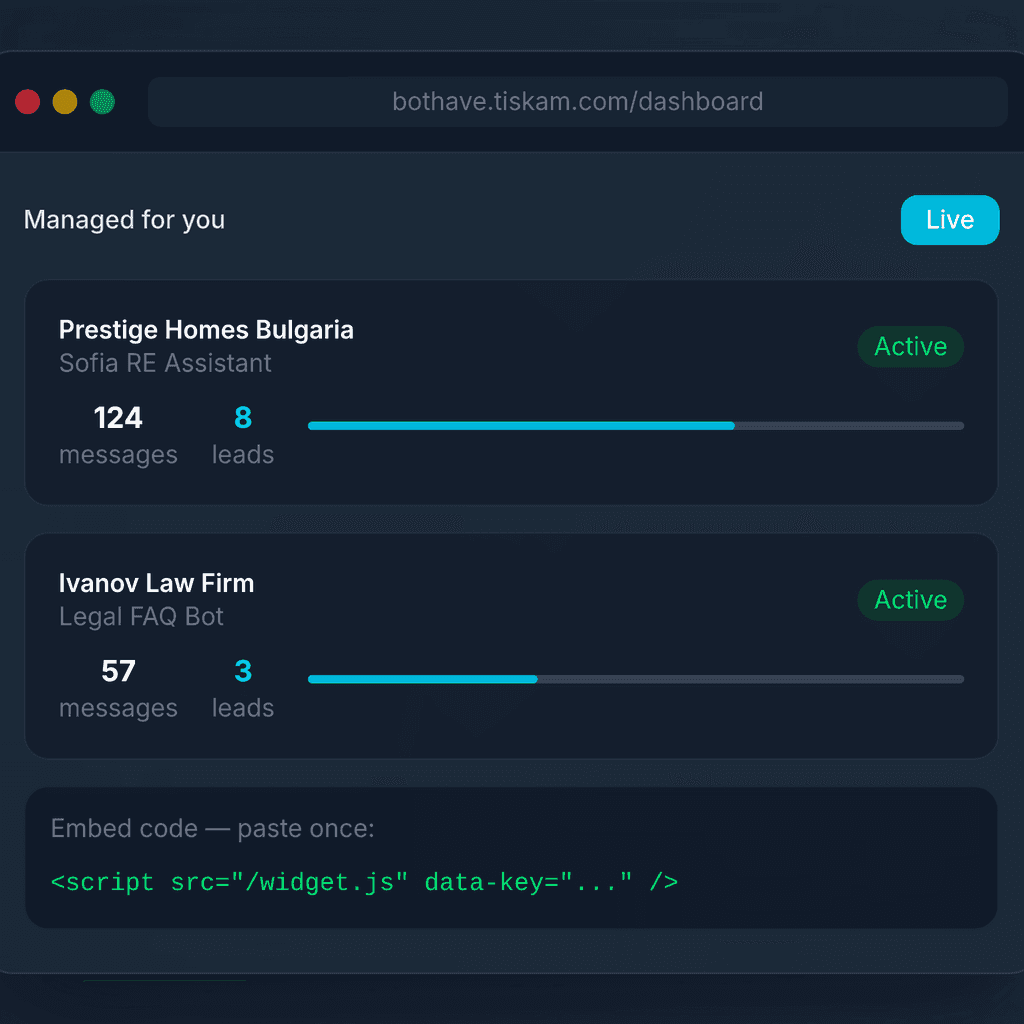
Or chat with it right now -- bottom-left of this page, answering live ↓
A small business losing international visitors to a language barrier doesn't have the time or the technical staff to build, configure, and maintain a chatbot themselves -- and most chatbot tools still expect them to. The gap wasn't a better chatbot; it was removing the setup work from the business entirely.
Paste a URL on Bot Have's own site and see a live, working bot on your own content in under a minute -- no signup, free, instant. Deciding to go further is a done-for-you process from there: tell Bot Have about the business, languages, and where leads should go; the team builds and brands a knowledge base from the site; you approve a live demo on your own site; it goes live within 48 hours of that approval, replying in whatever language each visitor writes in.
Paste any URL into Bot Have's homepage and it genuinely crawls that site, indexes its content, and stands up a working chat bot against it in well under a minute -- the chat bubble on this page is exactly that, generated for tiskam.com itself. It's the honest, instant answer to "would this even work on my site," with nothing to sign up for and nothing to configure.
Committing to the real thing isn't "flip a switch" -- it's handed to the Bot Have team: the business sends its site, FAQ pages, branding, the languages its visitors use, and where leads should land. From there:
That approval step is the deliberate trade-off against full self-service: a human checks the knowledge base and tone before a real visitor ever sees it, rather than trusting an automated pipeline to get it right unsupervised on the first try.
A bot that confidently invents an answer is worse than one that admits it doesn't know. Every answer comes from the knowledge base built from the business's own site and documents -- when a question falls outside it, the bot captures the visitor's contact details instead of guessing, and for anything resembling legal or medical advice, it sticks to intake only.
The product's whole premise is visitors a business is currently losing: someone who lands on the site, writes in a language the business doesn't staff for, and leaves unanswered. The bot replies in whatever language the visitor actually writes in rather than offering a fixed list to pick from -- the gap it closes is specifically the one a monolingual contact form can't.